
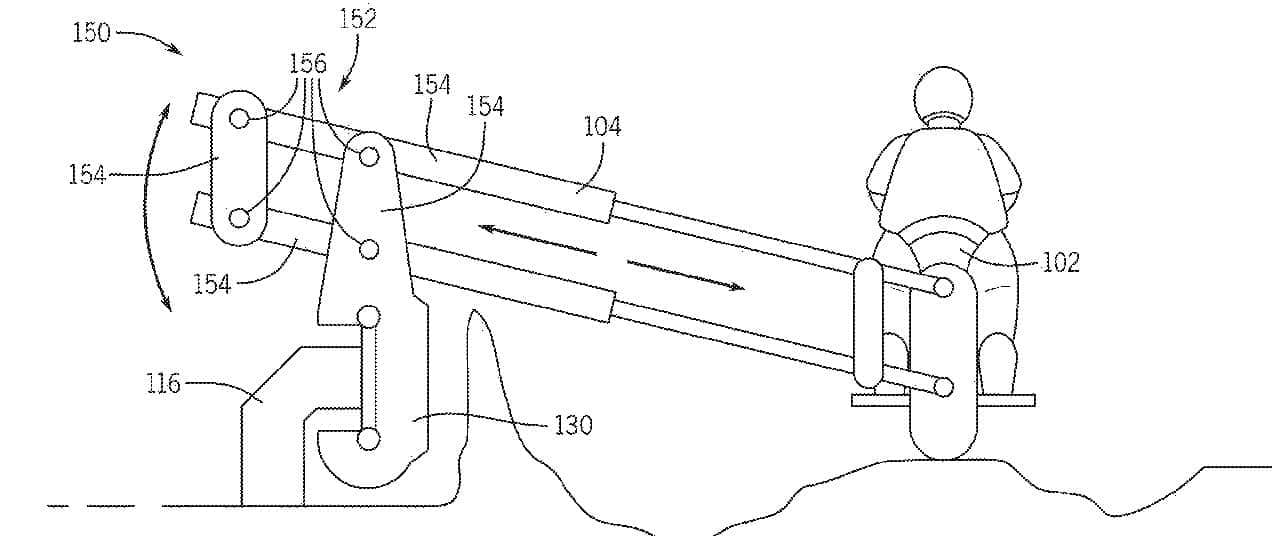


Let’s take a look at this week’s theme park patent filings, starting with Disney’s new articulating arm ride system.
It feels a bit like an extended version of Universal Studios’ Boom Coaster, which offers the ride system for its Mine Cart Madness coaster. Disney’s app also details a ride system with arms that attach to the side of the ride vehicle, but the system allows the arms to help guide and control the path of the ride vehicle in a more dynamic way. Passengers can feel as if the vehicle is driving on a rough mountain road, rough waves or turbulent air, while the vehicle is always under safe control.
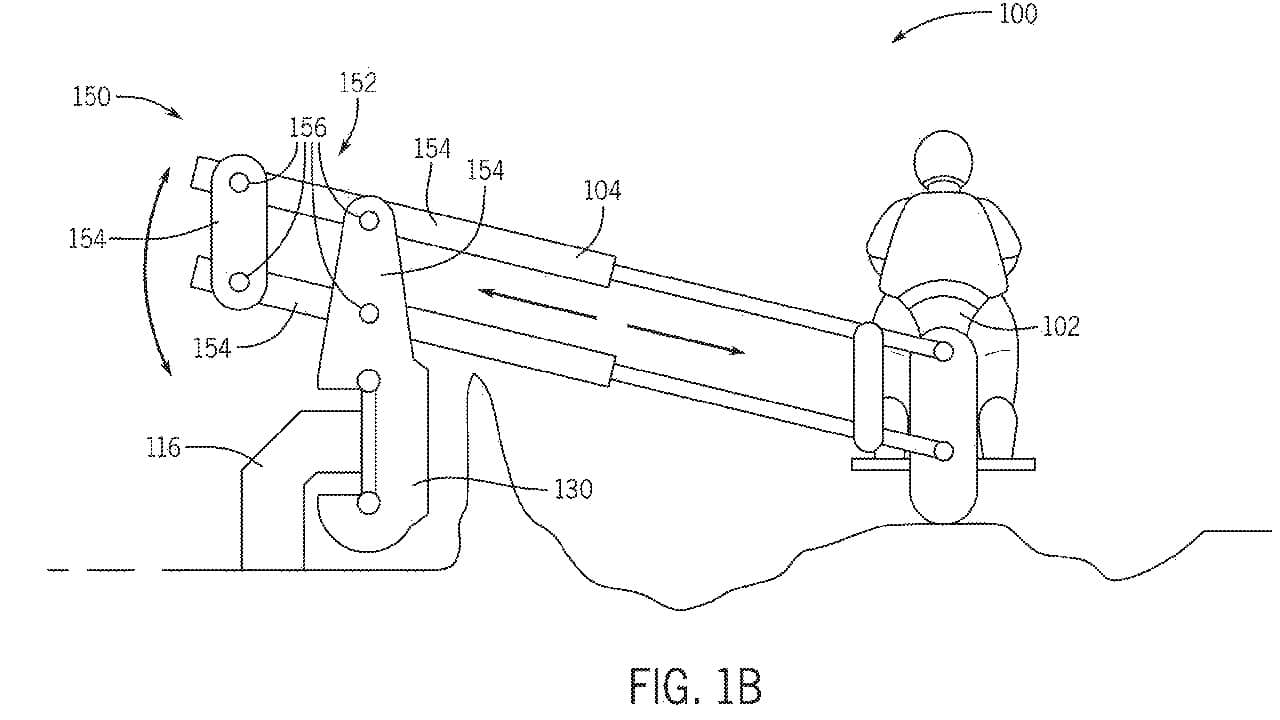
Image from Disney’s patent application
“Existing solutions often fall short of real-life simulation, often due to a lack of technology or the ride characteristics themselves. For example, for rides with movable vehicles, existing solutions may not simulate the physical dynamics of real-world vehicles. Additionally, existing solutions may not provide guest control, thereby limiting the guest experience. Therefore, there is a need for ride systems with articulated or moving arms that address the above issues or at least provide an alternative to existing solutions.”
When I saw this app, my first thought was, “Is this the ride system for the Piston Peak attraction at Magic Kingdom?” Disney is building a Cars-themed ride to replace Tom Sawyer’s Island and Rivers of America, with an opening date yet to be announced. But Disney promises that the proposed ride appears to be tailor-made for an off-road-type experience.
You can read the patent application here: Ride system with articulated arms.
Disney has also submitted a Patent application for modular omnidirectional drive floor Lanny Smoot demonstrated this to invited reporters, and Disney also demonstrated it on social media in 2024. [See Disney celebrates innovation with Hall of Fame announcement.]
Over at Universal, the company has filed a patent application for its own version of a “trackless” ride. This application, Ride positioning systemdetails how ride vehicles use signals returned from the ground they travel on to determine direction, rather than traditional track- or flume-based systems.
“The ride vehicle may include ground-penetrating radar for emitting electromagnetic radiation into the ride path to detect underground structures embedded therein, which may cause changes in the returned electromagnetic radiation signal received by the ride vehicle’s receiver,” the application states. “Based on the returned electromagnetic radiation signal, the vehicle positioning system may determine the vehicle location based on signal characteristics of specific path characteristics.”
For weekly updates on more theme park news, sign up Theme Park Insider’s weekly newsletter.