
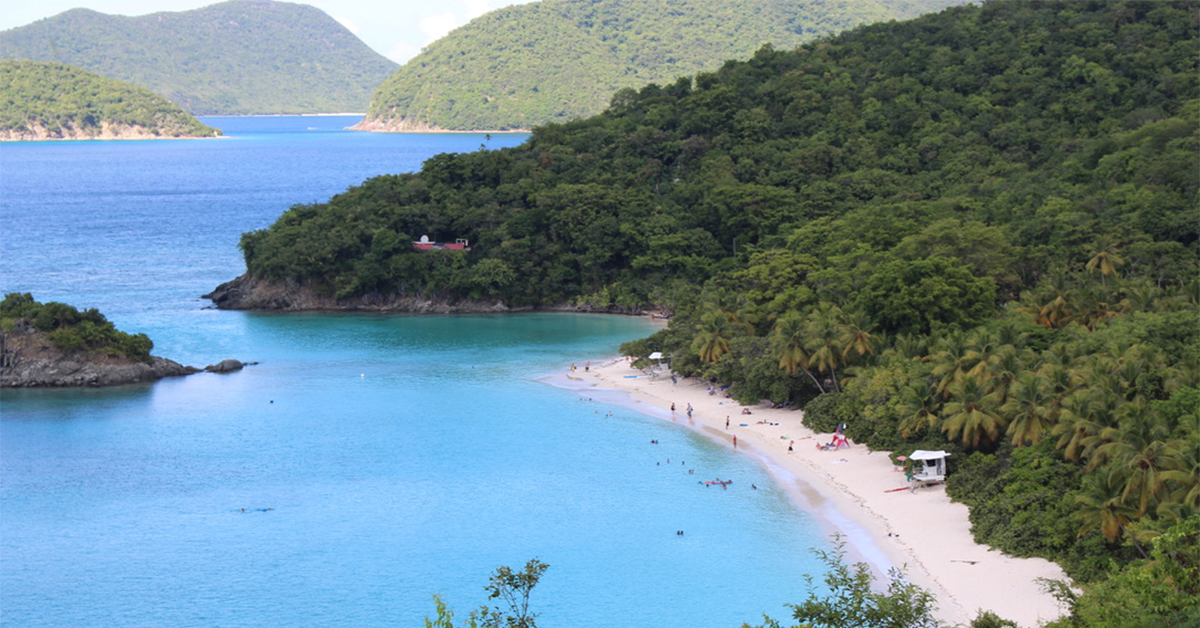
You wade into Trunk Bay, where the bottom is white sand and the water is so clear you can trace your own shadow. After taking a few steps, the sounds of the shoreline disappeared. Just the gentle rush of water against your ears and the faint crackle of the rocks. Ahead, a row of small boards sits just below the surface, anchored along a marked route. You float above them, face down, reading as you move, the Caribbean Sea spreading out below you with layers of coral, sea fans, and swimming fish.
This is not a guided tour or boat snorkeling. You enter from the beach and follow a designated path through the water. The experience is direct and physical. You move at your own pace, stopping where you want, hovering over formations that existed long before the signs were placed.
In this section of St. John, the reefs are not hidden offshore. It starts right where the sand slopes.
underwater trail
The Trunk Bay Underwater Snorkeling Trail extends approximately 400 feet along the bay and is a well-defined route within Virgin Islands National Park. These markers are placed on the seafloor, and each marker provides simple background information about what you’re seeing – the coral formations, fish species, the structure of the reef and the role each part plays in keeping the system intact.
You don’t dive into water to read them. You float above it, close enough to see the words through the mask. This path is shallow and designed for swimmers who are comfortable in the water but are not necessarily experienced snorkelers.
The reef itself changes as you move along the trail. Near the beginning, the formations are smaller and scattered across the sand. Looking further out, the coral thickens, with brain corals and staghorn-shaped corals rising from the bottom. Schools of blue tang move through in flashes of color. The Sergeants hold their ground in small groups and change positions as you approach.
There is no rush in the experience. Most people spend 30 minutes to an hour on the road, depending on how often they stop. Currents are generally lighter here, but you’ll still feel the pull of open water beyond the marked route.
The signs also carry a quiet instruction: Don’t stand on the coral. It’s a simple rule, but it defines how you move. You stay level, using your flippers or slow kicks to maintain your position. The coral reef beneath your feet is still intact.
caribbean national park
St. John differs from most Caribbean islands in one key way: a large portion of it is protected land. Virgin Islands National Park covers more than half of the island, including beaches, trails, and offshore waters like Trunk Bay.
This protection shapes the experience here. There are no large resorts on this stretch of coastline, and there are no large-scale developments behind the beaches. The shoreline remains open, with lush green hills behind. When you arrive and enter the water, the environment feels intact.
Trunk Bay itself is one of the most photographed beaches in the Caribbean. Winding white sand beaches, calm waters, small coral reefs just offshore – everything is visible the moment you step onto the beach. But the defining feature isn’t what you see from the shore. It all starts when you get into the water and follow the marked line through the reef.
Underwater walking trails make beach days more structured without losing the sense of freedom that comes with swimming in open water.
how do you experience it
You can start at the beach facilities, where you can rent snorkeling gear if you don’t bring your own. From there, it’s a short walk across the sand to the waterline.
Entry is gradual. You can stand up within the first few yards, adjust the mask, and get comfortable before entering deeper water. Marked trails start not far from the coast, so you don’t have to swim long distances to reach them.
Once on the trail, the experience becomes quieter. When you encounter a plaque, you lower your head, look for movement, and read the plaque. The speed naturally slows down. You are not pursuing anything; you are observing.
Visibility is often strong here, especially on calm days. Sunlight reaches the bottom, illuminating the coral and casting moving patterns on the sand. Clarity allows you to see details close to the surface—the texture of coral, the small fish moving between gaps, the changing colors that define a healthy reef.
The trail is open year-round and no reservations are required. You pay an entrance fee to access the national park’s beaches, and then the water is yours.
What you see beneath the surface
Trunk Bay’s coral reefs support a wide variety of marine life, and the trail is positioned to highlight this diversity. You may see parrotfish grazing along the coral, their movements steady and methodical. Blue tang and surgeonfish swim in schools, producing flashes of color that change with the light.
The closer you get to the coral, the smaller species move in and out. You might catch the fast flight of a damselfish, or the slow glide of a trumpetfish that blends in with the vertical lines of the sea rod.
The coral itself forms the basis of the experience. Brain coral has grooves on its surface that sit alongside branching structures, creating depth and shelter. Sea fans sway with the water, adding movement to the scene even when everything else is still.
You don’t need to identify every species to understand what you’re seeing. Markers along the way provide enough information to connect the visual experience to the wider system—how the coral grows, how fish depend on it, how fragile the balance is.
This balance is visible in real time. One section may show dense coral growth, while another section shows areas where the reef has been damaged or stressed. The contrast is subtle but present, a reminder of how easily this environment can change.
Rhythm of the Bay
Back on the surface, Trunk Bay maintains a steady flow of visitors, but the water absorbs most of the energy. Once you hit the trail, the activity on the beach disappears. The voice becomes deeper. Movement slows down.
Occasionally you surface to reorient yourself and look back at the shoreline or a small coral reef just offshore. Then you put your face back into the water and continue along the route.
There is no “end” that feels certain. Markers will guide you, but you can choose to turn around at any time. Some swimmers complete the entire 400 feet and then return along the same path. Others explore parts of the area, veering slightly off course to see more of the reef before returning.
The experience remains accessible at all times. You’re never far from the coast and access points are always within easy reach.
Travel to St. John’s
Saint John does not have its own airport, which determines how you arrive. You fly into the neighboring island of St. Thomas, where Cyril E. King Airport receives flights from major U.S. cities.
From there, you change to ferries. The trip from Red Hook on St. Thomas to Cruz Bay on St. John takes about 20 minutes, crossing open water with views of the surrounding islands along the way.
After arriving at Cruz Bay, drive along the island’s winding road for about 15 minutes to Trunk Bay. Taxis are available at the ferry terminal, or you can rent a car if you plan to explore beyond the main beaches.
The journey requires an extra step compared to islands with direct flights, but it also makes St. John much quieter, with fewer buildings and more focused on its natural surroundings.
Where to stay
Accommodations in St. John tend to be villas, boutique properties, and private rentals rather than large resort complexes. This approach is consistent with the character of the island, with the focus being on the views rather than the hotel’s footprint.
Blue sky luxury tour Access to a selection of villas and high-end accommodations throughout St. John. The portfolio includes hillside properties with expansive views of the Caribbean Sea, as well as homes located close to the coastline for easy access to the beach.
You’ll find villas with multiple bedrooms, private swimming pools and outdoor living areas designed to take advantage of the island’s climate. Interiors are often open, with large windows and terraces, directly connected to their surroundings.
Booking with Blue Sky Luxury Travels also provides local support, from arranging transportation to coordinating island experiences. These include guidance on which beaches to visit on specific days, where to find quieter snorkeling spots, and how to plan your time around the ferry schedule.
Staying at a villa will change the way you experience St. John’s. You can move between national park beaches, Cruz Bay’s diners, and quieter corners of the island at your own pace, without having to make a resort schedule.
If you’d rather stay somewhere with on-site dining, pool views and more traditional hotel amenities, saint Located in Cruz Bay is St. John’s newest choice.
The hotel is an adults-only resort with a compact footprint focused on wellness, dining and social spaces. You’re within walking distance of Cruz Bay’s restaurants and bars, but most of the experience is on-site, anchored by two swimming pools, a spa and an all-day swim-up bar.
Rooms tend to be suite-style settings, with clean, modern interiors and some class including kitchen space. With views of the harbor or surrounding mountains, the design keeps things simple and functional, in keeping with the way St. John’s lives outside of the room most days.
Saints is also a day club so the atmosphere changes over time. It’s quieter around the pool in the early morning, while in the afternoon there’s more activity with music and lively crowds.
What makes it unique on this island is its combination of adults-only accommodation, spa access and being just a few minutes’ walk from the ferry terminal. You can use this as a base to head to Trunk Bay early to explore the underwater trails and return to Cruz Bay in the late afternoon without having to plan a long drive.
Why this trail stands out
Caribbean snorkeling usually involves a boat ride, a guide, and a set amount of time in the water. Trunk Bay offers different models. You enter from the beach, follow a clear route and move at your own pace.
Add underwater markers to turn your coral reef into something you can read while exploring. It adds context without interrupting the experience. You’re still in open water, still able to move freely, but with a clearer view of what’s underneath.
The combination of convenience, structure, and natural surroundings make this trail one of the most unique snorkeling experiences in the area.
You don’t need advanced skills or specialized equipment. You’ll need a mask, a snorkel, and be comfortable enough in the water to float above the reef without touching it.
The rest is already in place, waiting just beyond the shoreline.