
Fela and Oia received the most attention. The cliff-top sunsets, the blue domes, the photos that looked exactly the same in a thousand travel feeds—that version of Santorini was real, but also well-rehearsed. Two villages a short distance south offer something different: what the island looked like before it was transformed by tour groups.
Pyrgos and Megalohori were shaped by Venetian fortifications, pirate raids and the wine trade. Their streets were built to confuse intruders, not to pose for the cameras. Together with a stop at the hilltop monastery of Profitis Ilias, they make up one of the most historic half-day tours on the island.
Related reading: Santorini Ecotourism Guide
Explore Santorini’s medieval villages with a local driver
Want to visit Pyrgos, Megalohori and Emporio without worrying about driving or parking?
looking for Flexible private tour or transfer service link these Traditional villages in Santorini And stop at the Monastery of Prophet Elias, the highest viewpoint on the island.
A common option is 4-6 hours island tour This includes time for walking the alleys of Pyrgos village, Megalochori village and Emporio medieval castle, the route is suitable for your rhythm and interests.
if you wish go deeperyou can also look for itineraries that add quieter communities, such as the villages of Finikia and Vothonas, or combine villages with traditional wineries with stops for wine tastings.
Pyrgos: the medieval capital of Santorini
Pyrgos Kallistis – the “Tower of Beauty” – is located in an amphitheater on a central hill, offering views of Santorini in almost every direction. It was once the capital of the island, a role later transferred to Fira in modern times. What remains is a classic example of medieval architecture: narrow, labyrinthine streets, fortified walls and hidden passages – and, by Santorini standards, relatively little tourism.
The village has more than 40 churches, some with A blue dome that can be photographed Some are quite far away from the castle walls and others are small enough to be completely missed on the first pass. Theotokaki Church is one of the oldest churches on the island, dating back to the 10th century. The Church of Panagia Eisodion was built between 1660 and 1661 on the highest point of Kasteli and houses Byzantine icons and carved wooden iconostasis. Most doors are only unlocked when a service is provided or by arrangement with a local – a stroll up the alley will eventually lead you to any of the open doors.
The rhythm here is different. The sounds of the village – backgammon in the local tavern and the occasional cat chatter – mark the rhythm some distance from the ferry terminal and queues at the crater rim.
Related reading: Medieval Santorini villages: where the island finally slows down
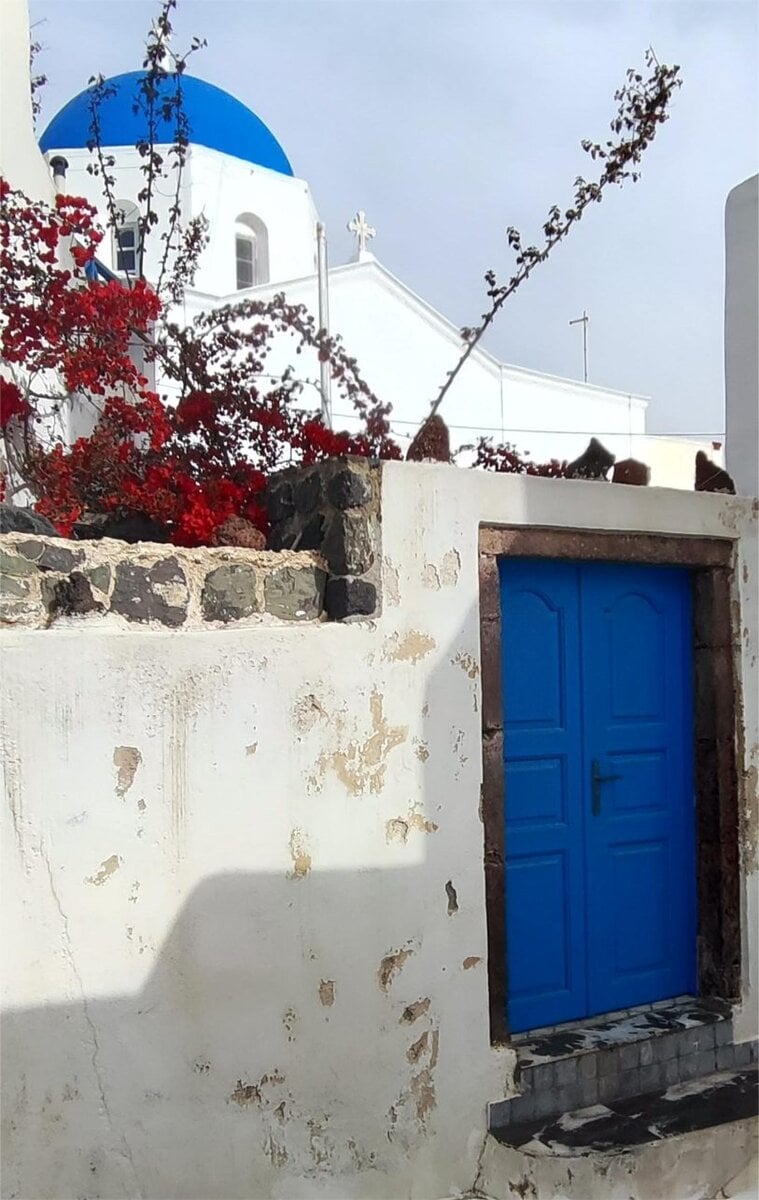
Inside Castelli
Pyrgos Castle was built during the Venetian period around 1580 and is the latest of five fortified settlements built on the island of Santorini. Its elevated position gave defenders a clear view of the Aegean Sea and the plains below, while its design focused on deterring pirate attacks.
The maze-like structure with low-slung two-story houses and sheltered balconies was designed to confuse those who managed to breach the walls. The castle has only one gate, which is closed at sunset. There was an opening above the entrance through which scalding oil could be poured onto anyone who walked that far. The settlement was also built on a network of underground passages and was intended to serve as a last resort in the event of the castle’s collapse.
Castelli Castle largely escaped the damage of the 1956 earthquake that reshaped much of the island, which is why it remains the best-preserved of Santorini’s five Venetian fortifications. Walking through it now, the geometry of the defense is still discernible in the street plan: dead ends, sharp turns, no direct sight lines.
Megalochori: Wine Merchants Village
Megalochori dates back to at least the 17th century and was built around the fortunes of merchants who exported Vinsanto wine to the Mediterranean. Neoclassical mansions, formerly owned by wealthy landowners and wine merchants, sit alongside cave houses and traditional dwellings along a network of winding lanes that converge on the main square.
Money is visible in architecture. The high facades and heavy wooden doors of the ancient mansion were not purely for aesthetic reasons: they also provided protection against the pirates who threatened Pyrgos, making Megalocholi a place that had to defend itself while also heralding prosperity.
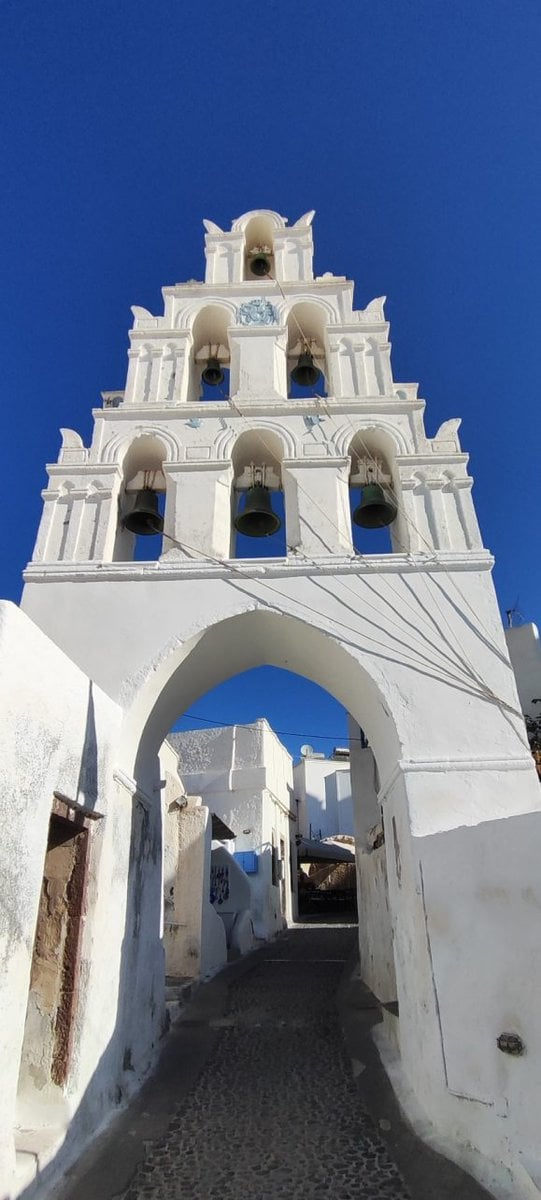
The village square is a natural stopping point – shady, calm, surrounded by cafes and bistros, the pace of the afternoon is unhurried. The bell tower of the Church of Santa Maria Maggiore stands above the square’s main alley, its six bells set in white arches above the cobblestones below. The village is small and most paths end up in the same square, which makes getting lost in the alleys feel harmless.
The surrounding plains are covered with vineyards, producing Assyrtiko grapes and Vinsanto wines – the same trade that financed the mansions that still stand in the village today. Several wineries are located just minutes from the village, including Boutari and Gavalas.
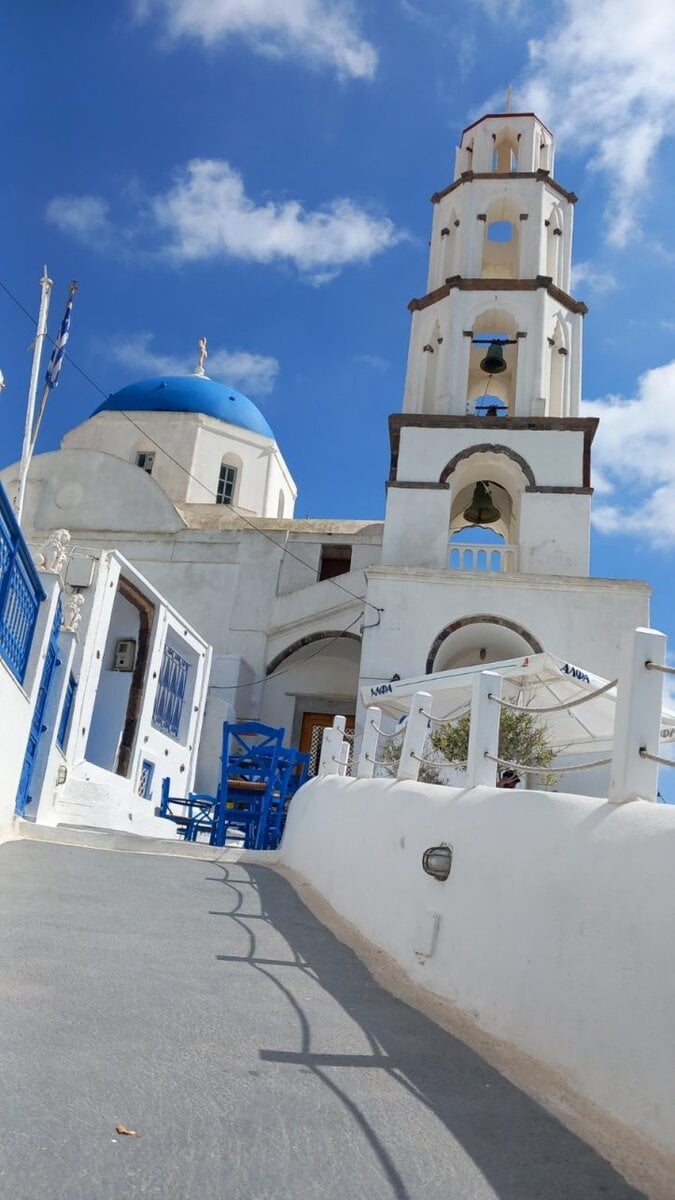
Profitis Ilias: Island at an altitude of 567 meters
The Profitis Ilias Monastery is located at about 567 meters above sea level, the highest point on Santorini. You can see almost the entire island from the courtyard. On a clear day, the crater, clusters of villages and the Aegean Sea are clearly visible.
The monastery was founded in 1711 by brothers Joachim and Gabriel, two monks from Pyrgos. It was built like a fortress – the monks on Santorini in the early 18th century were as worried about pirates as the villagers below. For about 150 years it served as an educational and economic institution: during the Ottoman Empire it ran a school teaching Greek language and literature and operated a merchant ship across the Aegean and Mediterranean Seas.
Some monks still live and work there. The monastery houses a collection of rare ecclesiastical objects, handwritten books and Byzantine icons, as well as active printing, shoemaking and candle-making workshops. The monks also produced wine.
Daily evening prayers are available for anyone interested in attending; confirm time before visiting. The most important day of the year is July 20, the Feast of St. Elias, when locals prepare for full services and vigils.
It can be reached by driving along the winding asphalt road from Pyrgos, or by walking along the 2.5 kilometers of clearly marked paths in Pyrgos’ main square. This route takes about an hour to an hour and a half each way.
Practical information
- Getting to Pyrgos: KTEL regular buses run from Fira Central Bus Station to Pyrgos. Take the Fira-Akrotiri route, get off at stop 9 and walk to the center of the village in 8 minutes. Pyrgos is located about 10 minutes’ drive southeast of Fira.
- Getting to Megalokhori: It is located in the southwest of the island, about 10 minutes’ drive from Pyrgos and 15 minutes from Fira. By bus, take the Fira–Perissa line and get off at Megalochori station. The Family Bakery has parking located off the main road.
- Profitis Elias: There is no direct bus to the top of the mountain. The nearest bus stops are on the Fira-Kamari route (stop 15) and the Fira-Perissa route (stop 9), both about 3 km from the monastery. The 2.5 km hiking route from Pyrgos is clearly marked and takes 60 to 75 minutes. Drive up the mountain on the paved road from the center of Pyrgos village.
- What to wear: Comfortable walking shoes are required for both Castle Lane and Abbey Lane. Shoulders and knees should be covered when entering monasteries and any open church. Bring sunscreen – there is little shade on the trail to the top.
- When to go: Heading to Pyrgos and Megalohori early in the morning will avoid the warmest parts of the day and the tour groups arriving in the morning. For Profitis Ilias, late afternoon provides the best light and cooler temperatures for the trail. Related reading: Reasons to Visit Santorini in Shoulder Season
- Admission fee: Admission is free to the villages of Pyrgos or Megalocri. There is no admission fee to the monastery, but donations are welcome. Some churches may be closed unless locals can arrange entry.
FAQ
Can you walk between Pyrgos and Profitis Ilias Monastery?
Yes. A 2.5 km long marked trail starts from Pyrgos’ main square and climbs to the monastery. This route takes approximately 60-75 minutes one way and is more demanding due to the elevation gain. The trail leads through bush and vineyards with no shade, so start early and bring water.
Is Profitis Ilias Monastery open to tourists?
The monastery courtyard and exterior are accessible, but the interior is generally closed to the public except during daily evening prayers (5 pm to 6:30 pm) and on religious holidays (especially July 20). A small gift shop near the entrance sells products made by the monks. Appropriate attire is required – shoulders and knees covered.
How much time should you allow to travel to Pyrgos and Megalochori?
A tour of Pyrgos takes approximately 50 minutes to 1 hour and includes stops at the castle and square. A stroll through the alleys and squares of Megalochori takes 30 to 40 minutes. Adding Profitis Ilias as a third stop (driving instead of walking) adds about 30 to 40 minutes to the time, including driving and enjoying the view from the top.
Are Pyrgos and Megalochori suitable for travelers with reduced mobility?
Both villages have cobbled, jagged lanes and steps, especially within Pyrgos Castle. Walkers can have difficulty with both components. Megalokhori’s main square and lower streets are easier to reach. The drive to Profitis Ilias is completely paved.
Are there places to eat in Pyrgos?
Yes. Pyrgos has a strong local gastronomic scene, centered around the main square and the streets below the castle. Several restaurants there have received national recognition. There is also a cafe in the square that is open from morning. Megalochori has a selection of smaller taverns around its own square.
What is the difference between these villages and the main tourist area of Santorini?
Oia and Fira are primarily built around caldera landscapes and the tourist infrastructure developed around them. Pyrgos and Megalohori predate infrastructure—Pyrgos’s Venetian castle was designed as a fortification, and Megalohori’s mansions were built by wine merchants before the island became a tourist destination. Both villages are undiscovered, but they operate at a significantly slower pace and illustrate the island’s different natural history.