
- Dark Sky Certification: Locations such as Death Valley and Cape Lookout have official international certifications guaranteeing the highest darkness levels and lowest light pollution levels in the country.
- Various RV accommodations: Options range from self-contained campsites like Furnace Creek to rugged, generator-free areas like Cottonwood Campground that prioritize absolute quiet and optimal darkness.
- Educational Park Planning: Each of these national destinations features a wealth of public stargazing activities, including ranger-led constellation tours, night hikes and annual astronomy festivals.
- Unique foreground landscape: Stargazing at these top locations combine celestial vistas with iconic geographical contours, from desert mountains and rocky hoodoos to coastal lighthouses
Chasing the starry night sky from the comfort of your RV is one of the most awe-inspiring experiences on the open road RV Trader. In a modern world filled with artificial brightness, these five incredible campsites offer a dramatic contrast, inviting travelers to look upward and rediscover the awe-inspiring depths of the universe.
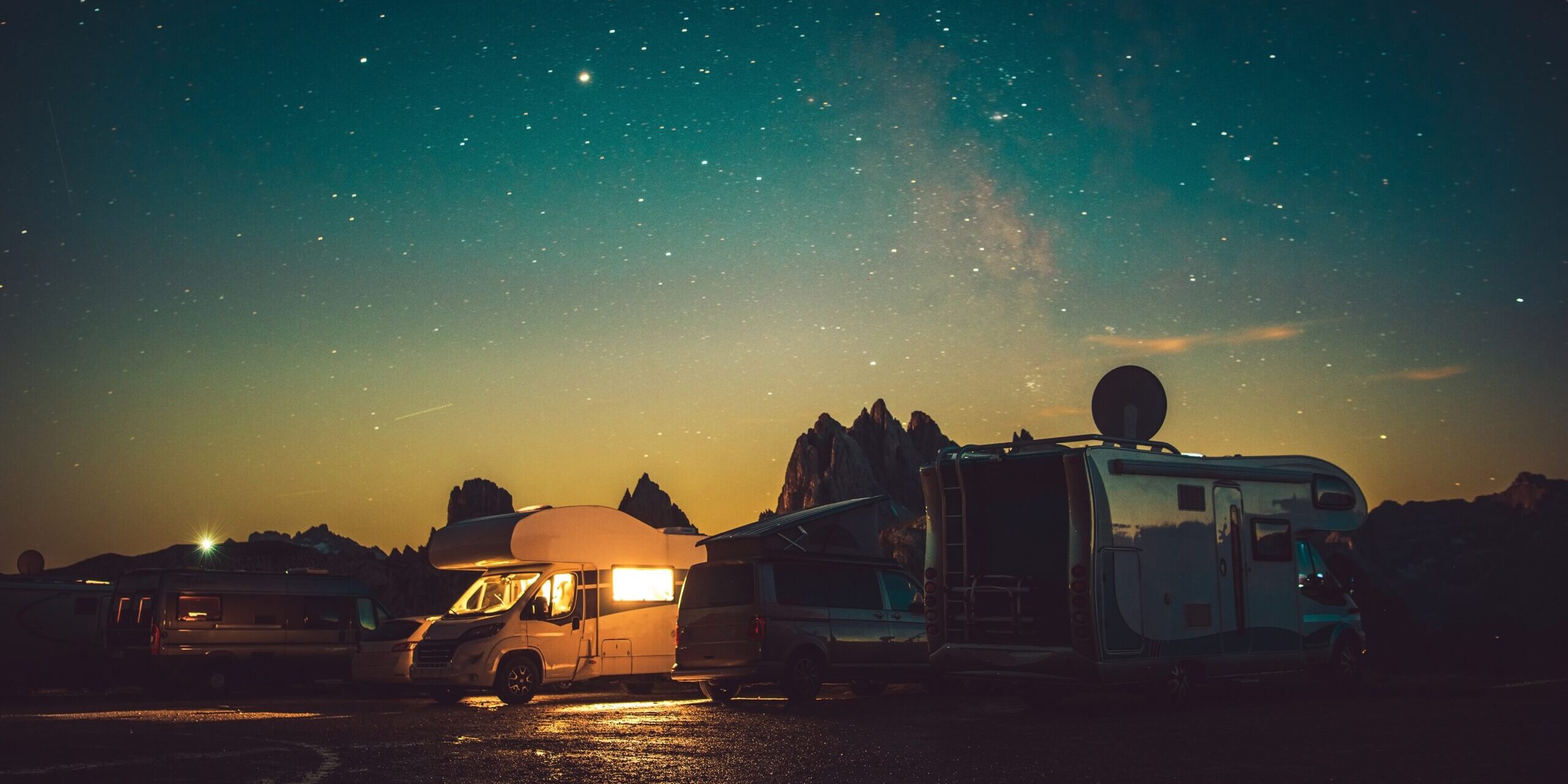
Big Bend National Park is nestled in the remote Chihuahuan Desert, one of the darkest areas in North America. Here, visitors can watch the Milky Way stretch across the majestic silhouette of the Chisos Mountains and take advantage of campgrounds like Rio Grande Village for an up-close look at ranger-led astronomy programs. Further west, Death Valley National Park holds the prestigious Gold Level designation from Dark Sky International. Dry air and low elevation create a refreshing backdrop for stargazing, and Furnace Creek provides full RV hookup amid an extreme desert landscape.
For a completely different geological wonder, Bryce Canyon National Park showcases the night sky above its famous rocky hoodoos. Visitors walking along Sunrise Point can experience the unique feeling of the emptiness of the canyon below and the endless starry sky above. Meanwhile, the high-altitude desert of Joshua Tree National Park offers basic, off-the-grid campsites where astronomy enthusiasts can gather with telescopes, especially in dark areas like Cottonwood Campground. Finally, Cape Lookout National Seashore proves that the ocean can magnify the stars just as much as the desert. Located on North Carolina’s undeveloped Outer Banks, this certified dark-sky park is accessible by ferry for coastal stargazing, and nearby Harker’s Island is a great base for traditional RVing.
Press release
Olivia de Soria
Release date: May 14, 2026
Honestly, somehow the night sky has faded into the background of modern life. People tend to light up our nights from every angle. When the sun sets, darkness and starlight are eclipsed by a continued brightness. So chasing the stars at campgrounds across the country can be one of the most awe-inspiring wonders of RV life. A night away from light pollution brings an undeniable contrast. Our eyes are suddenly opened to the depths of the sky and starlight that are often overlooked at home. To get the most out of RV life, we have to remember that the views don’t end at sunset.
So, let’s share five places to find starry campsites that are an absolute astronomical spectacle.
1. Big Bend National Park
big bend national park Consistently ranked as one of the darkest places in America. If you’ve ever been there, you’re familiar with the enormity it embodies. Located in the heart of the Chuajuan Desert, it is the largest desert in North America. Actually, rexpression It feels like the description is inadequate. It’s completely isolated, hundreds of miles from anywhere. The night sky reflects the vast land on which it sits.
The sky is illuminated by infinite starlight and colorful galaxies. The Chisos Mountains form a striking silhouette in the foreground. The Milky Way stretches across the desert like a living thing.
There are many kinds of big bends stargazing activities Available in the park. Park rangers and volunteers offer regular free activities. (Be sure to check out their Ranger Program Timeline Before you go. )
RV campground options
- Rio Grande Village RV Campground. This is my choice for an intimate experience with the night sky. It is the furthest campground from the park entrance and offers easy access to ranger-led nighttime activities.
- Cottonwood Campground. If you want a rocky campsite with no hookups and fewer crowds, this would be a good choice. Generators are not allowed here, so you can expect a little peace and quiet among the stars and galaxies.
- Research Butte RV Parks. This is a great option for lodging outside the park. This may be necessary if all RV sites in the park are full. Study Butte is 35 miles from the park, providing easy access to Big Bend’s darkest areas.
2. Death Valley
death valley national park Has an extreme reputation. It doesn’t end when the sun sets. It seems to me that when the sun sets, the landscape becomes more livable. The dry air, low elevation, and open basin make it a great place to experience after dark.
Dark Sky International has designated Death Valley National Park a Gold Level Dark Sky Park. (This is the highest level of darkness.) While you’re there, rest assured that you’ve chosen the right spot for your astronomical interests. (NASA was also on hand to watch.)
Death Valley has many night sky events. from dark sky festival On ranger-led constellation tours, there’s no end to the activities after dark.
RV campground options
- Furnace Creek Campground. This campground is located in the heart of the park with full vehicle hookups
- Texas Springs Campground. This site is somewhat off the grid and does not allow hookups or generators. It is also slightly higher in elevation than Furnace Creek and has good sky visibility.
- Mesquite Spring Campground. This location probably offers the most remote, quietest, darkest experience and is further from developed areas.
3. Bryce Canyon
The first time my family and I went to Bryce Canyon, we arrived after dark. I thought the show would start after sunrise the next morning. I soon realized the real show was after dusk. The environment is huge. At the sunrise/sunset points, you can walk along the cliffs of the canyon, look up at the sky above and feel the vastness below you. The ominous thing rises from the void and points to the infinite point of light above. This experience is unique.
stargazing plan exist bryce canyon national park There are plenty available. It offers night sky telescope programs, full moon hikes, and an annual astronomy festival for professional stargazers.
RV campground options
- North Camp. This is the closest campground to Sunset Point and one of the best spots for stargazing.
- Sunset Campground. Another popular camping option within the park, it has darker skies and fewer nearby lights.
Star campgrounds in Bryce Canyon are growing in popularity, but finding sites is becoming increasingly difficult. Here are some park service suggestions nearby alternatives. If you’re fully equipped, consider dispersed camping. When our family lived in Bryce Canyon, I went running in the nearby Dixie National Forest. It made me wish I could camp there.
4. Joshua Tree
joshua tree national park It is a high altitude desert far away from any major cities. It has all the makings of heavenly stargazing. When we arrived at the campground within the park, I was surprised to see how remote the place was, despite its popularity. These starry campsites are very basic and do not have any water or electricity. People stay at Joshua Tree for the unique scenery, not the park amenities. The scenery after dark takes on a completely different look.
Shortly after arriving at Ryan Mountain Campground, we knew this would be an excellent stargazing destination. Our neighbor set up a crude tent next to a car. He casually unloaded a telescope worthy of a space museum. He kindly asked us to turn off all lights after 10pm and even turn off our phones if we planned to go out. I knew then that it was going to be a great night.
The Joshua Tree National Park Service has designated four areas for optimal stargazing:
- quail springs
- hidden valley
- capping layer
- Ruian Mountain
They offer ranger-led night sky programs year-round. Check park services calendar Upcoming events. If you have time, check out Sky Limits Observatory and Nature Center Just outside the north entrance to the park.
RV campground options
- Cottonwood Campground. Rated as the darkest sky in the park, it is located at the park’s southern entrance and is noticeably remote.
- White Tank Camp. The campground has 15 campsites and is available on a first-come, first-served basis. White Tank features the iconic monolithic structure on the horizon, creating a distinctive silhouette against the Joshua Tree night sky foreground.
5. Point Lookout National Seashore
Deserts aren’t the only landscapes that offer some of the most beautiful views in the sky above us. The ocean has a way of magnifying the depth and scale of the overhead view. Cape Lookout National Seashore is an undeveloped area of North Carolina’s Outer Banks.
point lookout national seashore It is a certified International Dark Sky Park. It offers some of the darkest skies on the East Coast. There are various kinds of things in the national park stargazing activities Open to the public.
Camping options
There are no designated RV campsites in the park. The beach is only accessible by boat or ferry. if you have a little Class B A campervan, such as a Sprinter or Transit, you should be able to bring to the island. But be prepared to camp in a rough way without any hookups or water.
Most RVers interested in camping at Cape Lookout must park their gear at Harkers Island RV Resort and Campground. From here, you can pack up your tent and take the ferry to Cape Lookout for a rugged camping trip. Spending the night under the stars might sound like a lot of work, but trust me: it is Worth it.
But if this feels like a nudge, don’t despair! Beaufort, North Carolina has local operators offering guided tours stargazing trip and starlight cruise Head to Cape Lookout Lighthouse.
Embrace the darkness at Starry Sky Campground
RV travel is more than just the destination. It’s about changing our perspective. This lifestyle changes our daily lives and schedules, as well as our consciousness. It offers us the irresistible opportunity to turn our gaze upward to the infinite space above. This perspective is existential. It broadens our understanding of the world, inviting us to reimagine our place in it and rethink how we spend our precious time here.