
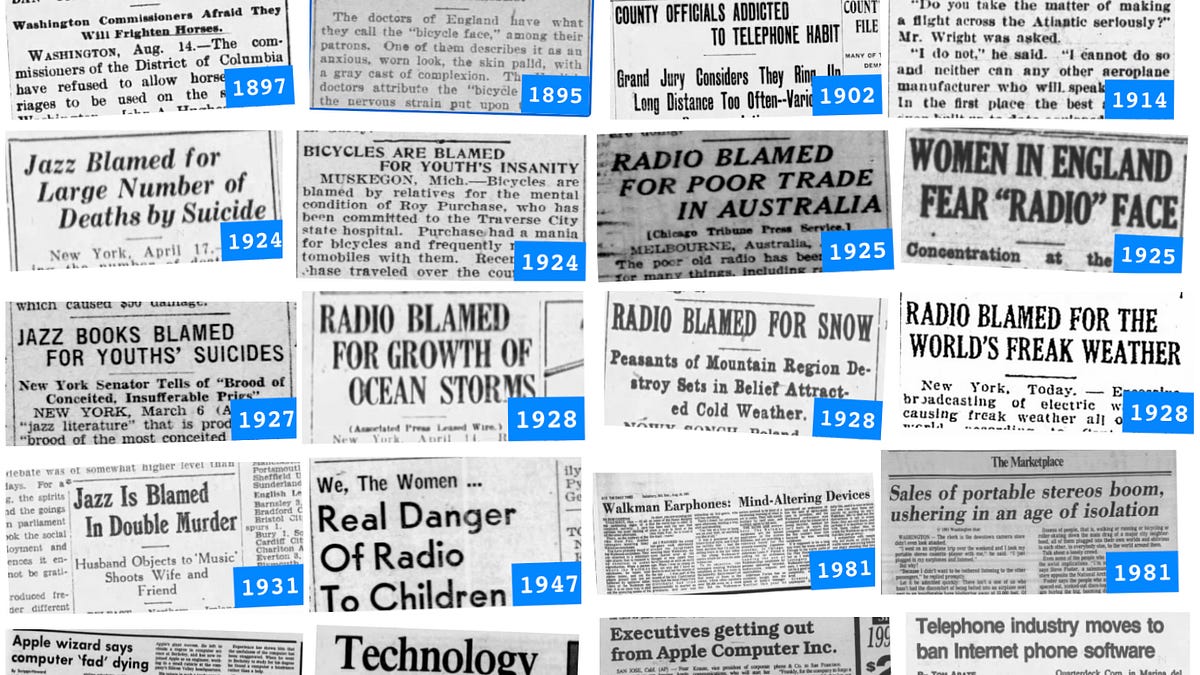
The world is more interesting than the headlines suggest, and people who see this won’t wait for consensus. Pessimists have been wrong about every transformative technology in history. They were wrong about cameras, bicycles, books, manned flight, music, radio, the Internet, and they were wrong about artificial intelligence. New technologies expand the world, and the gap between the disaster makers and the first movers is where opportunity always exists. It takes a disciplined character to spot the gaps. This is the advantage of the optimist. And it can be learned.
special thanks Propelik Sponsor this newsletter:

Propelik is a leading travel marketing agency built for how people discover travel today. We help travel brands thrive through SEO, paid media and AI-driven visibility across platforms like ChatGPT. Our recent work helped G Adventures achieve double-digit organic growth and improve rankings for high-intent search terms through coordinated organic and paid strategies. Ready to convert clicks into bookings?
Book a meeting Start your journey. Let’s grow.
NFX’s Pete Flint uses photography to explain the possible impact of artificial intelligence. When the camera arrived in 1839, the painters were alarmed. Painting is not dead. It exploded into impressionism, cubism, photojournalism, amateur photography, street photography, instant photography, each subversion adding layers of meaning. The game just got bigger.
The same pattern is forming now. Flint charts a hierarchy worth internalizing. Execution is becoming automated. Craftsmanship is being commodified. Even taste (knowing what has worked before) will eventually become a learnable signal for AI. What survives is expression: a genuine view of what might have happened.
He gave the example of Picasso. He first mastered realism and then abandoned it for something no one wanted, until it became one of the most important paintings in history. He takes “skills” as the bottom line and then works towards what only he can do. Leading founders do the same thing: treat commoditized execution as a bet and compete on something only they can see. Read+NFX
The fear of AI taking away jobs is real, but it’s also misguided.
U.S. Census data shows that about 60 percent of the jobs people hold today did not exist as distinct occupations in 1940. New technologies create entirely new categories of jobs.
The numbers ahead are equally compelling. world economic forum Future of Jobs Report 2025 It is expected that 170 million new jobs will be created and 92 million jobs will be lost by 2030, resulting in a net gain of 78 million jobs. They also estimate that about 65% of today’s primary school students will end up in jobs that don’t yet exist.
What we call “worry about artificial intelligence unemployment” is mainly about the current Unemployment, that’s understandable. But the historical pattern is consistent: Automation reshapes and expands jobs, making old roles obsolete while creating new ones at scale. Artificial intelligence looks like a continuation of this pattern. Faster, but essentially no different.
The destruction is real, but the ending is not.
Every new technology creates moral panics. Marc Andreessen traces it back to Socrates, who believed written language was a mistake. The bicycle got its own version in the 1880s, when the press warned that young women who rode bicycles would develop “bicycle face,” a permanent grimace caused by exertion that would make them unable to marry. Jazz corrupts young people. The same goes for rock music, hip-hop, the internet…each one ruins everything.
Technology changes, but the panic remains the same. What gets repeated is the reaction to disruption, and that reaction drives the clicks and the headlines.
Artificial intelligence is no exception. But what makes this moment harder to decipher is that even those closest to a technology often misunderstand where it is headed. Edison invented the phonograph and was convinced that its primary use was for religious sermons, imagining families gathering around the device at night to listen to the preacher’s speeches. The world has other ideas: music. The inventors of a technology that would reshape global culture and spawn entire industries completely misread where it was headed. Even Wozniak (Apple co-founder) openly doubted the usefulness of computers.
When the daguerreotype—the first publicly adopted photographic process—debuted in Paris in 1839, most portrait painters thought their craft was complete. Samuel Morse, a painter and inventor of the telegraph in his own right, saw things differently. In a speech at the National Academy of Design, he called it “undoubtedly destined to spark a great revolution in art” and urged artists to understand its impact rather than fear it.
While most saw the end, Morse saw the beginning.
The gap between the disaster makers and the first movers often lies in the opportunities.
When you see these types of headlines…
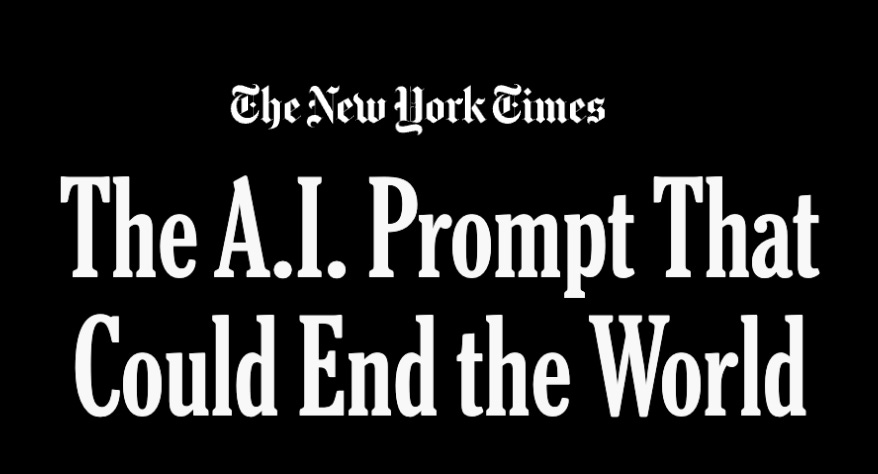
Remember, history rhymes.
In 1903, the New York Times predicted that manned flight would take 1 to 10 million years. Nine weeks later, the Wright brothers took off on Kitty Hawk. Once flight was proven possible, critics called it a rich man’s toy.
When Kennedy announced plans to go to the moon, opponents coined “moondoggle” (American slang for a wasteful government vanity project). Even Eisenhower (founder of NASA) called anyone who spent $40 billion to go to the moon a “lunatic.” When the moon landing finally came, one teachers union organizer went to bed early, calling it “a miniscule exercise in prestige.”
The complete arc of every transformative technology: impossible → wasteful → obvious
Pessimist Archives There is a receipt.
The pattern of history is that transformative technologies expand the world of work, not shrink it. In the long run, pessimists are wrong. But the short term is more complicated. A new Harvard Business Review study tracked AI adoption at a technology company with 200 employees over eight months. Artificial intelligence does not reduce workload. It exacerbates it. Workers moved faster, worked in a wider area, and voluntarily extended their working hours into their former break periods. Many participants felt busier than before using AI. The mechanism is that speed increases expectations → higher expectations increase dependence on artificial intelligence → more dependence expands scope → wider scope creates more jobs.
The AI adoption arc may be coming to a smooth end, but the path there carries risks of burnout that most companies haven’t yet anticipated.
Nir Eyal Modern Wisdom Podcast Talk about how your beliefs shape your interpretation of the world. They also predetermine what you see in the world.
Two groups were asked to count photos from a specially designed newspaper. The average time spent identifying as a pessimist was 2.5 minutes. The average time for self-described optimists was 11 seconds. The title of the second page is “There are 48 photos in this newspaper.” Optimists see this and claim their prize. Pessimists count the photos one by one without seeing the answer in front of them.
The same mechanism works in reverse. In the Dartmouth Scar Study, women had realistic fake scars plastered on their faces. Before entering the room, the researchers secretly removed it without their knowledge. They report being stared at, discriminated against, and made uncomfortable because of scars that no longer exist. They expected a response, and found responses everywhere.
Hans Rosling gave university professors an exam on the actual state of the world (education, health, democracy, women’s empowerment, etc.). Their grades are worse than monkeys. Their existing beliefs render the evidence invisible.
Successful entrepreneurs see opportunities that others miss. Not because they are smarter, but because they want to find them. If you look for $100 bills on the floor, you will find them. If you’re looking for reasons why it doesn’t work, you’ll find those reasons too.
One way to develop your insight into opportunities is to consciously choose your sources. For most of history, if you wanted to understand what founders were building and why, you had to trust journalists to translate it for you, with their biases, deadlines, and narratives intact. That era is over.
“Every company is a media company now. You should publish your own content, directly to your own blog, social media… I really don’t like the idea of publishing information through traditional journalists who bring their own biases and filters.” — Coinbase founder Brian Armstrong on David Senra Podcast
We are living through a golden age of primary resources. Founders and entrepreneurs speak directly to millions of people. No filters, less spin, and no headlines written before the coverage begins.
Read more, listen to builders, and skip the middleman.
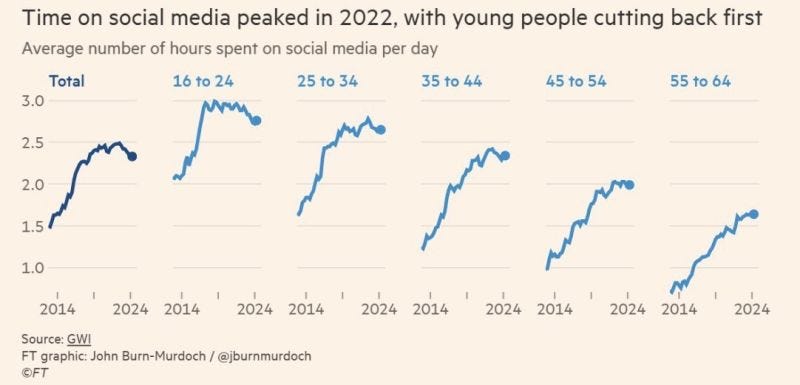
Social media usage appears to have peaked around 2022 and has been declining since then. Young people are leading the retreat; they grew up online, saw it come full circle, and concluded that endless scrolling won’t make you happier or smarter. Greg Isenberg calls it going against the trend: Shift your attention back to things that feel real, slow, and intentional.
His list of opportunities includes slow media formats, private communities, paid memberships that offer depth, and anything in real life…dinners, get-togethers, shared experiences.
The internet’s oldest assumption, that more engagement equals more value, is being shattered. In their place are spaces where people feel grounded, informed and connected.
Note: Data are self-reported, so consider direction rather than precise numbers as signals.
Today, the agritourism market is worth $8 billion, and it’s Isenberg’s way of bucking the trend in the travel industry. By 2033, this number will reach $21 billion, growing nearly 12% annually. Ben Wolf explains Why. 99% of consumers want transparency in their fresh food sourcing. Farm hotels skip certification and supply chain documentation because guests go out into the fields and see it first hand. Visual verification instantly builds trust, and trust justifies the premium price in a way that sustainability claims on a menu never can.
The properties leading this category have found what Wolf calls the “seed to soul” continuum. The farm determines the menu, spa treatments and educational experiences. Blackberry farms in Tennessee, Babylon stores in South Africa, salamanders in Somerset. High-margin catering from hyper-local ingredients, beekeeping workshops, on-site retail, large events.
The model has also trickled down into residential real estate. Agrihoods (master-planned communities built around working farms) are one of the fastest growing concepts in residential development, with 200 communities operating in 28 U.S. states.
What all of these have in common is transparency, health, community, connection to the land. Guests can feel the difference between treating it as a core product or using it as a sustainable marketing proposition.

I added a new pattern Travel Technology Essentials Co-Pilot: Review of pitch materials. It’s the same thinking partner for product and growth, but now it can also stress-test your fundraising story.
When you share a deck or have a fundraising question, it switches gears and reviews it through the framework of the most influential Silicon Valley venture capital firms, flagging common mistakes, rating the strength of the pitch, and recommending rewrites and structural improvements. But more importantly, it can diagnose why: unclear positioning, weak traction, or a disconnected story.
Go ahead and share your deck and ask it to be rated to identify weak areas and how to improve it.
New companies on job boards: Navan and Stay22.
-
Navan is recruiting for sales, revenue operations, strategy, product and data positions in the U.S. and Europe, with a focus on go-to-market and commercial teams. View all Open roles here.
-
Stay22 is building out its Montreal team across product, engineering, data, operations and business roles. View all Open roles here.
→ Explore All open positions in 2030 On the Travel Tech Essentialist Working Committee.
📩 subscription Travel Technology Work Newsletter.
If you like Travel Tech Essentialist, please consider sharing it with your friends or colleagues. If you haven’t subscribed yet, please join us here:
As always, thank you for trusting my inbox.
Mauricio Prieto