

I’ve been doing this long enough to be selective about where and how I spend my time. Here’s a behind-the-scenes look at my work at an industry conference, why I attend, what I do there, and what it means for the clients I serve.
The Emotional Travel Show in Madrid last week was worth every hour and dollar.
Fair warning: This particular session had a theme that ran through my first morning that I wasn’t expecting. More on that later.

Why Spain. Why now.
I haven’t been to Spain in decades. This alone is enough to solve the problem.
Spain is one of those destinations that seasoned travelers think they know but often underestimate. It rewards deeper research and also rewards consultants who conduct the research themselves. I went to Emotions to sell more trips to Spain; if I hadn’t explored it, I couldn’t sell it in the best possible way.
There is also an actual conversation that deserves to be discussed openly: Spain is more accessible than other European destinations at this level.
This doesn’t mean budgeting. This means the value here is honest.
Available in Spain. Personally guided experiences, boutique hotels with real character, tables where relationships are built – they’re all here, and at price points that make the investment feel smart rather than extravagant.
For customers who are used to paying high prices in Paris, Rome or London and occasionally wonder whether the high prices are justified, Spain presents a compelling case. I want to understand it well enough to argue the case with authority.
Why specifically emotions
Not all trade shows are created equal. Format is just as important as the attendee list.
Emotion is a small but focused show. That’s its power. No noise distractions, no endless exhibition space, and no attention dilution. Vendors who come to Emotions come to have a real conversation.
The meeting format is fifteen minutes. That might not sound like much until you go through a standard five- or eight-minute appointment at a major trade show. Fifteen minutes is enough to ask a meaningful question and actually hear the answer. Enough time to determine whether the person across from you is a supplier or a potential partner.
I took that time seriously.
Over the course of three days, I sat across from 47 vendors at scheduled appointments and had more than a dozen conversations in between—in the hallways, at lunch—that remind you why in-person attendance still matters. One of them was a vendor I met at Embark’s immersive conference in April. We shared a taxi. She returned to Madrid. The industry is smaller than it looks and these moments of overlap are no accident, as she confirmed to me what I was doing to book train tickets for French clients.
Total: 51 conversations in three days.
By region:
Spain (16), Portugal (6), Italy (6), United Kingdom (4), Germany/Austria/Switzerland (4), France (3), Croatia (2), Greece (2), Ireland (2), Belgium (2), Monaco (1)
By type:
Hotels and Resorts (32), Destination Management Companies (10), Tourism Bureaus (4), VIP Shopping Experiences (2)
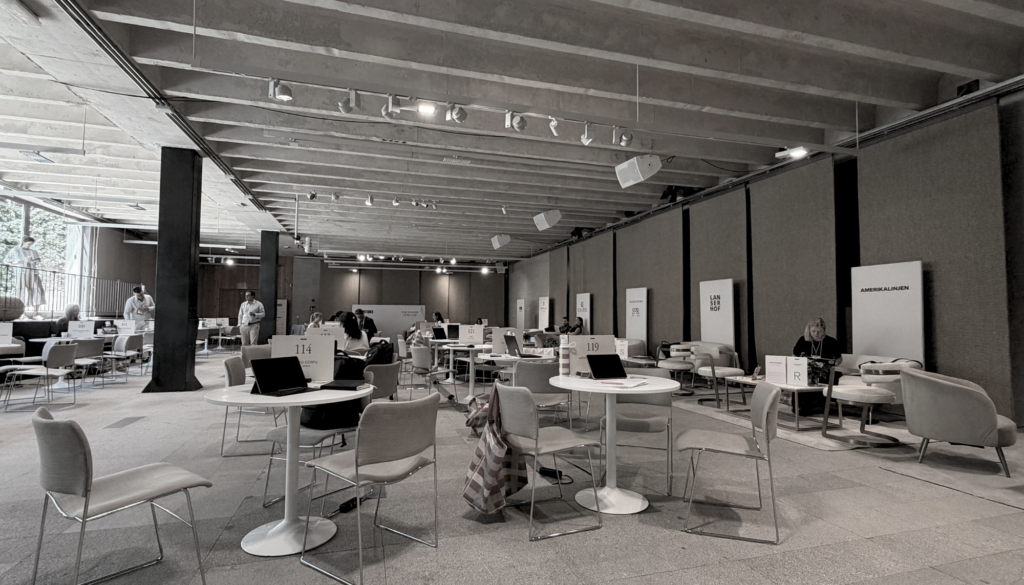
What did I actually do in these fifteen minutes?
I’m not here to collect pamphlets. I’m not here for a sales pitch. I was there to learn, listen, and ask—with respect, curiosity, and attentiveness.
The best people ask me about my business when I sit down. This is what I told them:
Based in Washington, D.C., I work for Embark Beyond, a New York-based luxury travel company, and currently work on some of the most rigorous and exciting jobs in the industry.
My clients are primarily couples: dual income, no kids, high discretionary spending, maximum flexibility.
My definition of wellness is broad—far beyond green juices, yoga mats, and spas, although for some clients that’s totally true. For others, fitness is about jumping out of airplanes. It’s a private audience with the first violinist of the Berlin Symphony Orchestra, or a behind-the-scenes tour of the Paris Opera, or a private ballet lesson on a stage that has been performing for a century. As I use the word wellness, it means anything that makes you feel more alive, energetic, and complete.
One of my favorite questions to ask new clients is: What did you enjoy doing when you were seven, eight, or nine years old – how can we bring that quality of play back into your life now? The answers are always enlightening and almost always the key to the best trip I can design for them.
My clients are experienced, well researched, and accustomed to making their own plans. They won’t hand it over easily. They come to me not because they can’t plan a trip, but because I can open doors they can’t open on their own because I view their time as a limited, irreplaceable resource.
For hoteliers, I’m looking at more than the numbers – keys (in industry language, that’s the sum of rooms and suites), pools, treatment rooms and restaurants. Numbers tell me the shape of a place. The next questions tell me its characteristics.
I’d like to know the average check-in time and whether it fits the appeal of the hotel. I want to know where guests typically come from—which countries, which cities—because my clients travel abroad precisely to immerse themselves in new places, rather than find themselves surrounded by the crowds that remain at home. When 80% of a hotel’s guests are from one country, that tells me something important about the experience of waiting inside.
For smaller properties—anything with fewer than fifty keys—I would ask two questions that may seem simple but are not: Do you have an elevator? Do you have a concierge staff? Charm doesn’t carry luggage up four flights of stone steps, and no concierge means no safety net when something needs fixing at eleven at night.
The questions change depending on who is sitting across from me, but the intent is the same. I use the client’s time to evaluate whether the person is trustworthy.
For my local partners, the DMCs (destination management companies), I ask them what information they need from me to do their best work. The answer is enlightening. I’ve been told that they like to know what their clients do at home on Saturdays—not the resume version, but the real thing: what they do when no one is watching. Things they loved before the trip even became part of the picture, as well as things they had done before and never wanted to do again. This absorption results in a trip that is completely different from the list of destinations and experiences.
From there, I’ll go deeper. For destination management companies, I’d love to know what the craziest request they’ve ever received is and what they do about it. I want to know their breakdown protocols, whether I work with one contact from proposal to execution, their booking windows, their minimum spend, and how long their key supplier relationships have been in place.
The last question is where the best stories emerge.
One DMC has been with the same driver company for three generations. It is mentioned almost in passing that my grandfather once ferried for Salvador Dali.
This is not a vendor relationship. This is where it comes from.
This is exactly the kind of reliable longevity (to use a buzzword) that my clients take home long after they unpack their bags; my clients are experienced, information-hungry, curious clients who value insight, judgment, and uniqueness.

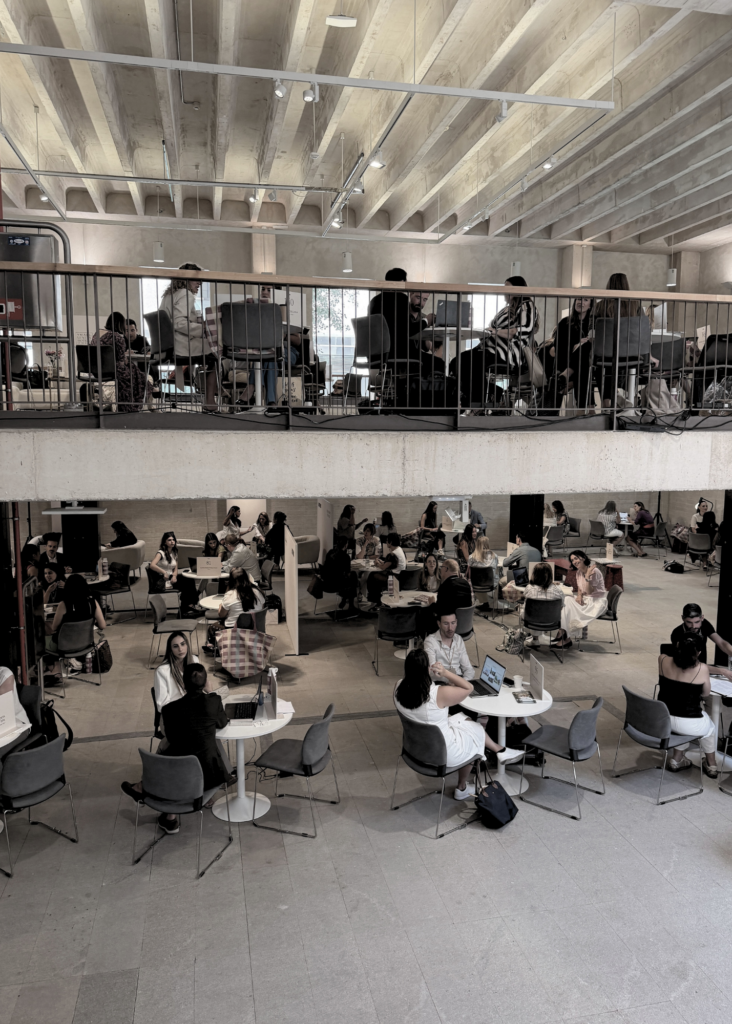
My first morning theme
I mentioned a topic. here it is.
One London hotel I met – stately property, impeccable credentials – almost mentioned in aside that they had a director of psychotherapy. Charming. And very unusual. What follows is even more unusual: They also retain a dominatrix who provides special education classes on self-play and intimacy. It’s perhaps no surprise that the best-selling items in the minibar are award-winning Italian-designed sex toys.
I moved it to the top of the “Properties requiring a very specific client profile” list.
Another DMC presented their portfolio in Barcelona. The client requested an avant-garde experience and emphasized that they were not interested in Gaudí, not in Surrealism, nothing predictable. DMC did what good operators do: they asked enough questions to understand what avant-garde really means to this particular couple. They design a private experience that combines wine tasting and bondage techniques.
By 10:30 on the first morning, I had already encountered this place twice.
I share this not to shock, but because it illustrates the reality of this job: the range of what people want from their tours is truly vast, and the best suppliers are those who can maintain that range without flinching and execute it with the same professionalism as a Tuscan cooking class.
Curiosity and judgment are equally important. That’s what I’m looking for across the table.
Details that stay with you
Not everything on Emotions is so colorful, but the quieter details are just as telling.
- One DMC spent nearly two years designing a private solar eclipse experience in a remote location—with an English-speaking astronomer on hand, a meteor shower that evening, and 15 guests. It doesn’t exist on any booking platform.
- The repeat customer rate of a health brand is as high as 70%. I will be visiting in person and then sending out a client this summer.
- Wild swimming in a Bavarian alpine lake – cold, clear and crowd-free. The kind that doesn’t take a picture and doesn’t leave you.
- A Swiss hotel that uses no nails at all, is built by hand using local wood and techniques that require access to lost techniques to execute. This took several years. You can feel it.
- A palace built in 1897. Game of Thrones was filmed here. The same goes for Star Wars. Americans dismiss it because of the brand logo on the door. They are wrong.
- A former perfume factory in Milan’s design district is now a five-star hotel where every suite is furnished with perfume, cocktails are crafted around scents and an on-site laboratory offers perfume tastings similar to wine flights. This is not a hotel with interesting facilities for the right client. This is the whole point of the trip.
- Inside one of Paris’ most famous department stores lies a private apartment with no signage or walk-in access. I can take you inside. Welcome drinks, carefully selected products, tax refund, and no minimum consumption limit. An exclusive suite experience designed just for men is also available through my Embark partnership. You won’t find it on any website.
- My favorite hotel in Florence just announced the opening of a five-star hotel in Piedmont this month. Truffle country. Barolo Country. The same DNA is an area that most tourists have yet to discover.
This is everyone I sit down withday by day. If a name makes you pause, it’s a conversation worth starting. Tell me which one and I’ll tell you what I learned.
what does this mean to you
I leave behind an emotional legacy of relationships, intelligence and a keen sense of possibility – especially now in Spain, Italy, Croatia and France.
I said at the beginning that I’ve been doing this long enough that I can choose where to spend my time. Madrid took advantage of this well. The question now is whether these destinations make the best use of your time.
If so, I know who to call, what to ask, and what to avoid.
Reach out. Let’s talk about it.